History
Las Cruces is a Rio Grande farm town that became a railroad stop, a college town and a city of more than a hundred thousand people. This page tells that story in short, with a link to the source for every claim.

A short history of Las Cruces
Las Cruces is a Rio Grande farm town that became a railroad stop, a college town and a city of more than a hundred thousand people. This page tells that story in short, with a link to the source for every claim. For the full text of the old books, see the reading list.
The crosses
The name is Spanish for “the crosses”. The earliest settlers reported three crosses just north of the town; the crosses were thought to be either marked graves or roadside memorials called descansos [1]. The town itself was surveyed by the US Army in 1849, after the land passed to the United States under the Treaty of Guadalupe Hidalgo of 1848 [1].
A battle on Christmas Day, 1846
During the Mexican-American War, a column under Colonel Alexander Doniphan marched south along the Camino Real and fought a Mexican detachment at El Brazito, in the area south of what is now Las Cruces, on December 25, 1846 [2][3]. A historian writing in 1912 recorded that the American side counted the Mexican losses at about seventy killed, while Mexican historians called it a skirmish and said their commander withdrew in good order [3]. Doniphan marched on to El Paso del Norte two days later [3].
The valley, and Mesilla
Before the Gadsden Purchase of 1853 the Mesilla Valley sat on the border between Mexico and the United States [4]. After it, Mesilla was the larger town: in 1860 it had more than 2,000 residents, more than twice as many as Las Cruces [1]. A federal official who rode down the Rio Grande in the 1850s to hold court at Las Cruces found “a modern-built Mexican village” of about a thousand people on one broad street, and was not convinced by the glowing accounts of the valley’s fertility [5].
The railroad chooses Las Cruces
When the Santa Fe railway reached the area, Mesilla’s landowners refused to sell it rights-of-way. Residents of Las Cruces donated the rights-of-way and the land for a depot instead [1]. The first train arrived in 1881, and the town was incorporated in 1907 [1]. The city’s Railroad Museum now sits in the historic Santa Fe Railroad station [1].
By 1895 a publisher’s history of the territory could call the Mesilla Valley “the Happy Valley”, praising its alfalfa, orchards and vineyards, and noting that Las Cruces was the county seat, the home of the Territorial Agricultural College and “quite a winter resort for invalids” [6].
The college
New Mexico State University began as Las Cruces College, which opened on September 17, 1888, founded by Hiram Hadley, an Indiana teacher [7]. In 1889 the Rodey Act placed the territory’s agricultural college “at or near the town of Las Cruces” [7]. Out of its fields came the modern New Mexico chile: horticulturist Fabian Garcia began his work in 1894 and released the New Mexico No. 9 chile in 1913 [8].
Lawmen and a mystery
Pat Garrett, best known for the death of Billy the Kid, served as sheriff of Dona Ana County. He worked in Las Cruces on the disappearance of Colonel Albert Jennings Fountain and his eight-year-old son in January 1896, a case never solved [1][9]. Garrett himself was killed in February 1908 on the road out of Las Cruces; who fired the shot is still argued [9].
Downtown, remade
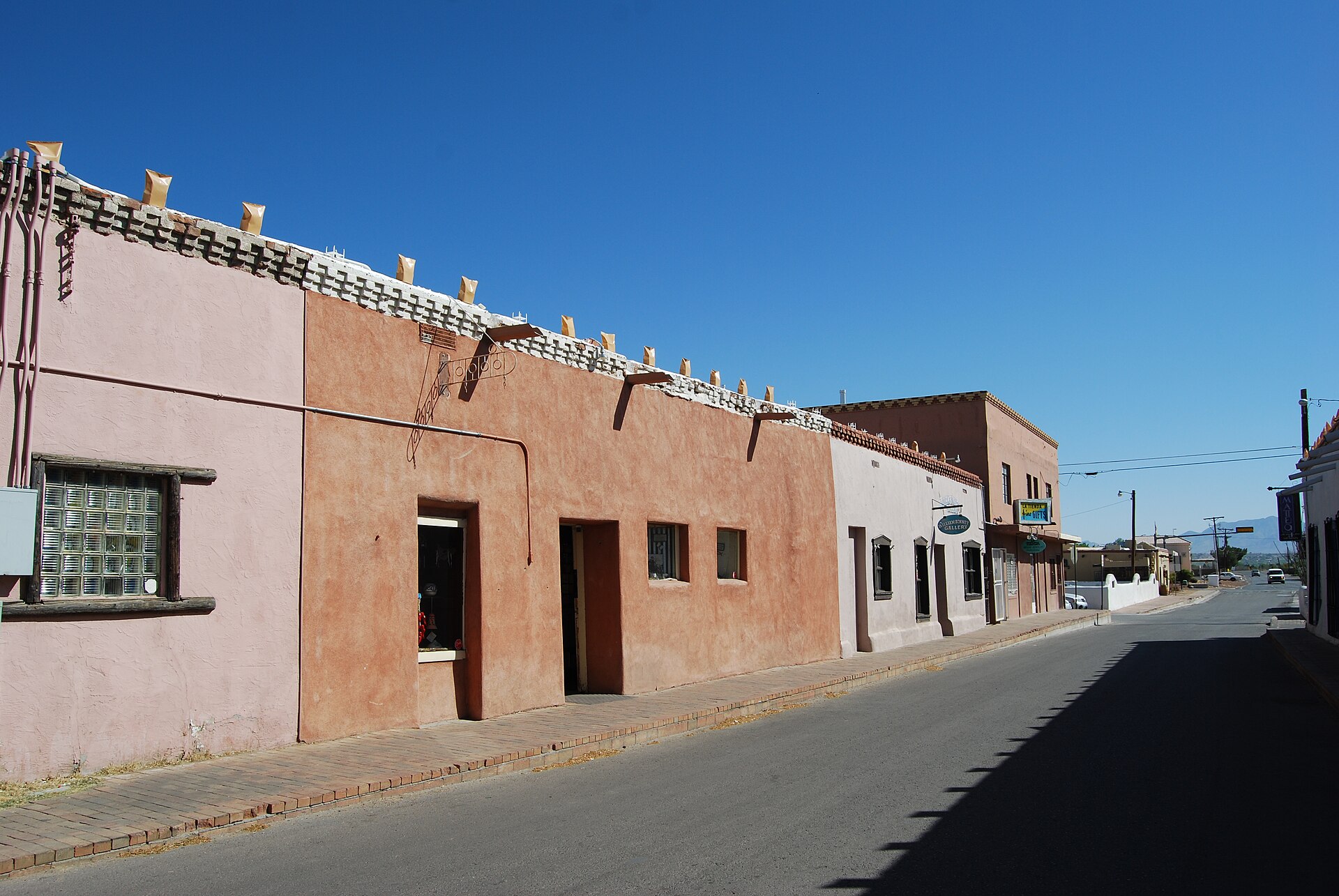
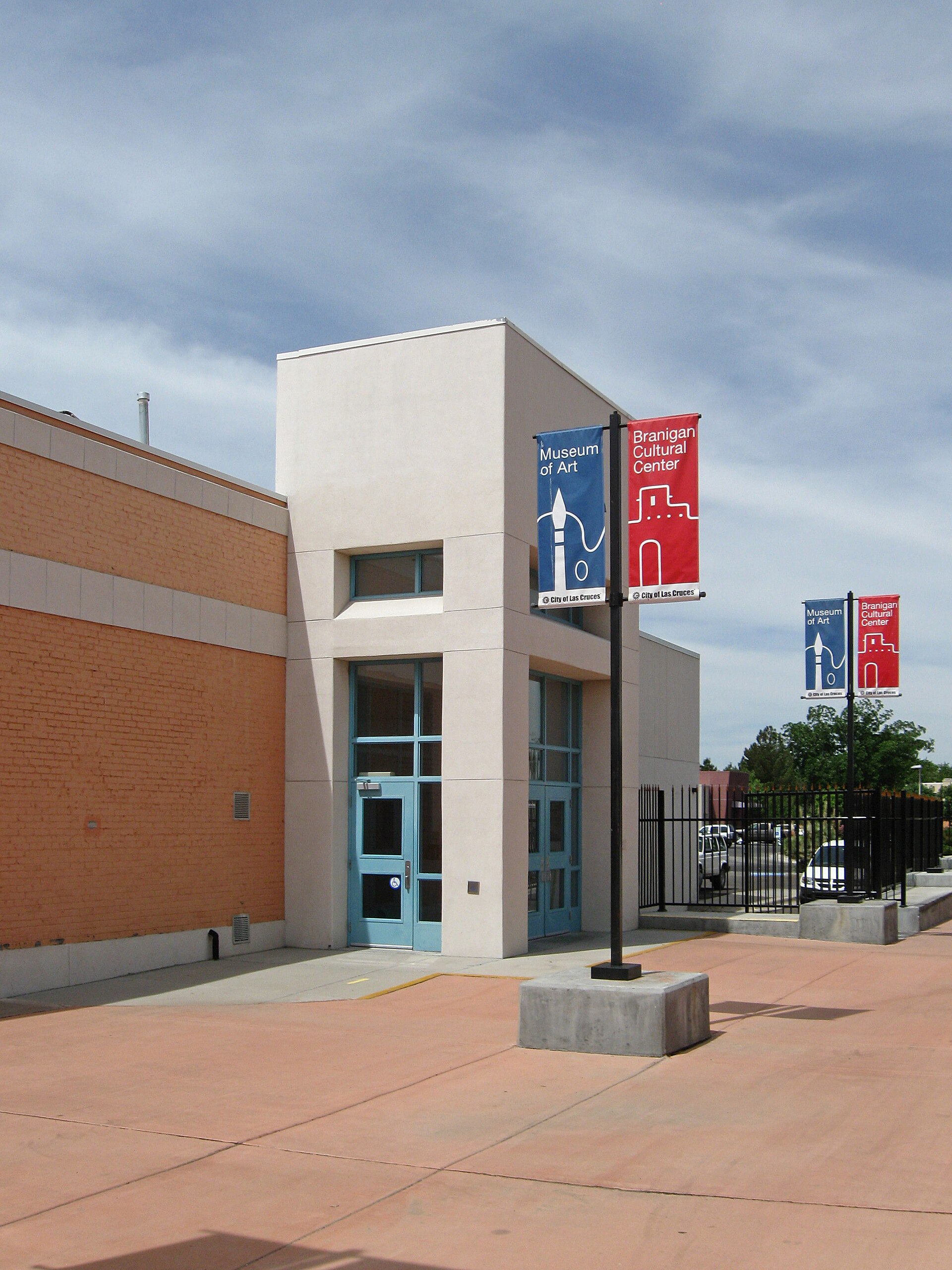
In the 1960s an urban-renewal project cleared much of the old downtown, including St. Genevieve’s Catholic Church of 1859, for a pedestrian mall [1]. Six blocks of Main Street were closed to traffic in 1973 and reopened to cars in 2012; the farmers’ market on the downtown mall runs on Wednesday and Saturday mornings [1]. The former Branigan Memorial Library of 1935 is now the Branigan Cultural Center, on the National Register of Historic Places [1].
The mountains and the monument
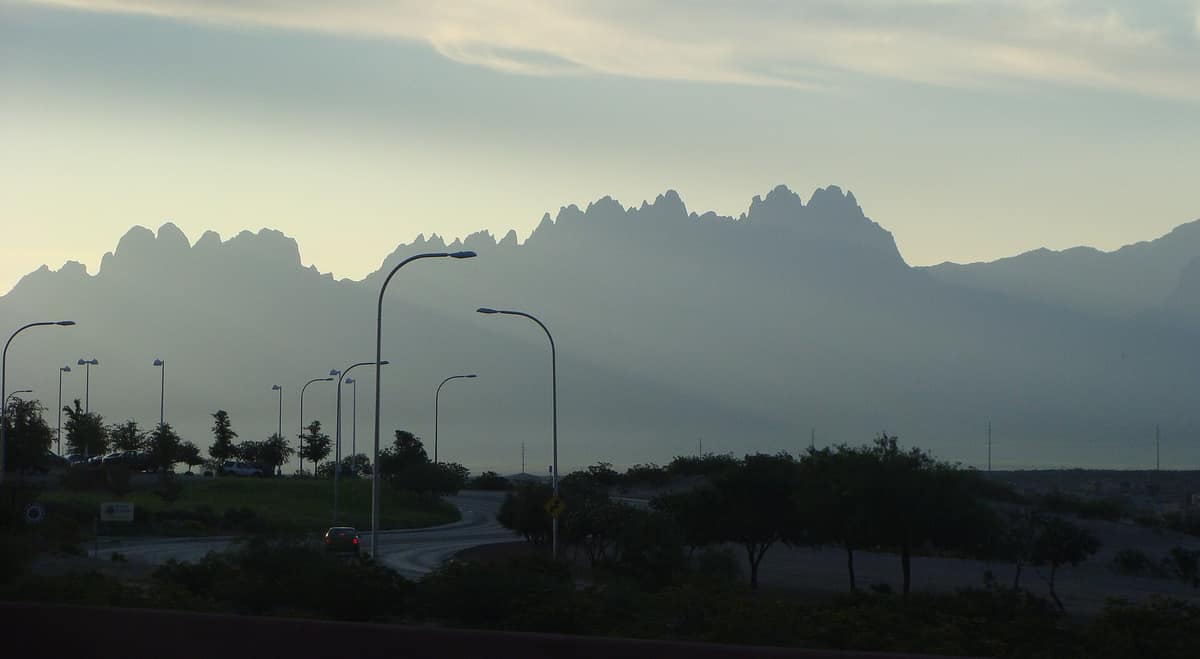
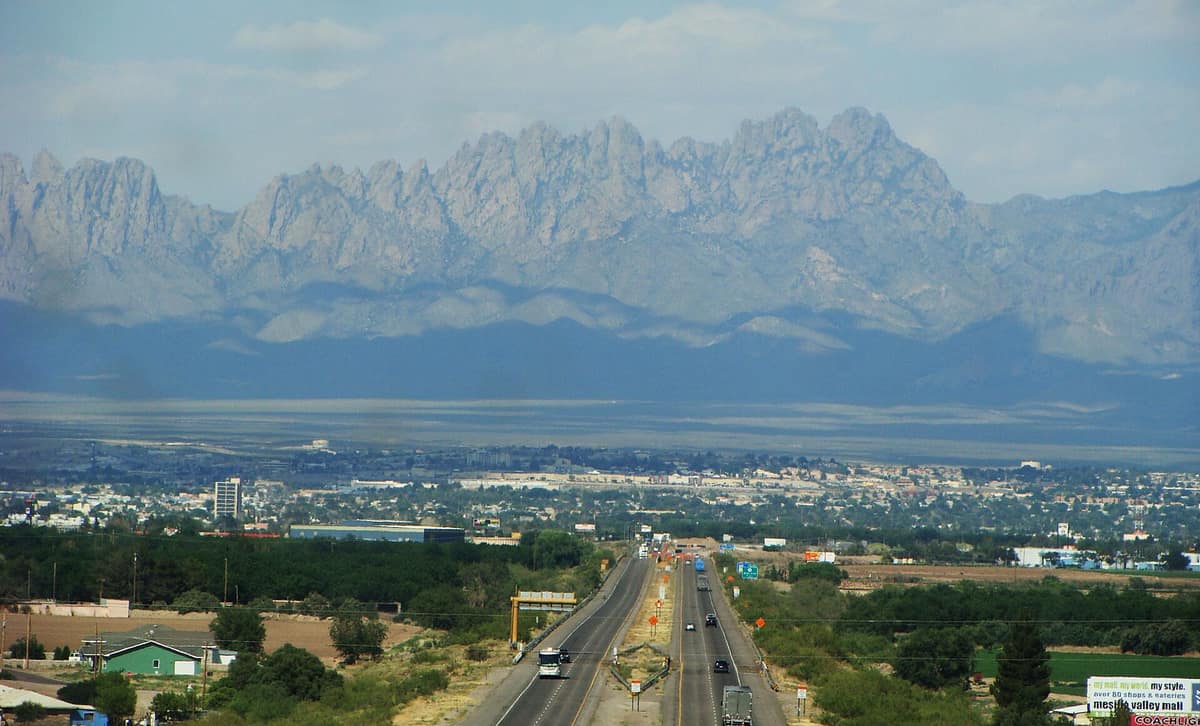
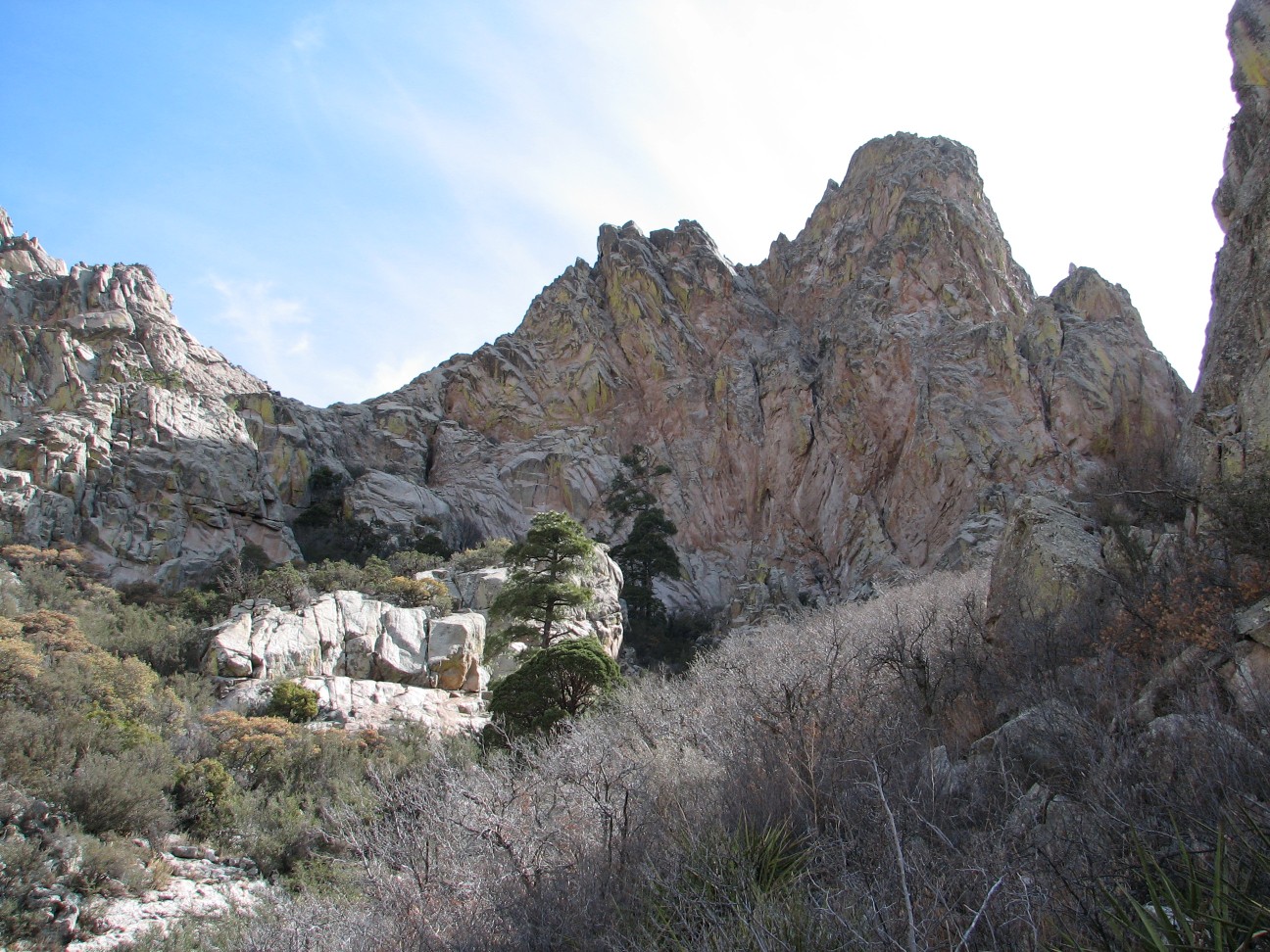
The Organ Mountains, ten miles east of the city, take their name from granite needles that look like organ pipes; their highest point, Organ Needle, is 8,982 feet [10]. On May 21, 2014 President Obama designated the Organ Mountains-Desert Peaks National Monument, protecting 496,330 acres around Las Cruces [11]. Las Cruces counted 111,385 people in the 2020 census, the second-largest city in New Mexico [1].
Key dates
01
1846
El Brazito
On Christmas Day Colonel Doniphan’s column fights a Mexican detachment at El Brazito, south of today’s Las Cruces. Source ↗
02
1849
The town is surveyed
The US Army surveys Las Cruces, named for three crosses early settlers saw north of town. Source ↗
03
1853
The Gadsden Purchase
The Treaty of Mesilla buys the land west of the Rio Grande; Mesilla becomes the valley’s largest town. Source ↗
04
1865
Fort Selden
The army establishes a fort about 13 miles north of the town to bring peace to the valley. Source ↗
05
1881
The railroad
Las Cruces donates the rights-of-way and depot land Mesilla refused, and the first train arrives. Source ↗
06
1888
Las Cruces College
Hiram Hadley opens the school that becomes New Mexico State University. Source ↗
07
1894
Chile at the college
Fabián García begins the breeding work behind New Mexico’s modern chile. Source ↗
08
1896
Fountain disappears
Colonel Albert Jennings Fountain and his young son vanish near White Sands; Pat Garrett works the case from Las Cruces. Source ↗
09
1907
A town
Las Cruces is incorporated as a town. Source ↗
10
1973
Main Street closes
Six blocks of Main Street become a pedestrian mall; they reopen to traffic in 2012. Source ↗
11
2014
A monument and a chile
The Organ Mountains-Desert Peaks National Monument is designated, and the first Chile Drop lights up New Year’s Eve. Source ↗
Sources
1. Las Cruces, New Mexico - Wikipedia
2. El Camino Real de Tierra Adentro - Wikipedia
3. Benjamin M. Read, Illustrated History of New Mexico (1912) - Internet Archive
4. Organ Mountains-Desert Peaks National Monument - Wikipedia
5. W. W. H. Davis, El Gringo (1857) - Internet Archive
6. Lewis Publishing Company, An Illustrated History of New Mexico (1895) - Internet Archive
7. New Mexico State University - Wikipedia
8. New Mexico chile - Wikipedia
10. Organ Mountains - Wikipedia
11. Organ Mountains-Desert Peaks National Monument - Wikipedia
Further reading
An Illustrated History of New Mexico, Lewis Publishing Company (1895) — public domain, free to read online
El Gringo, or, New Mexico and Her People, W. W. H. Davis (1857) — public domain, free to read online
Illustrated History of New Mexico, Benjamin M. Read (1912) — public domain, free to read online
Wonderland: The Story of Ancient and Modern New Mexico, Albert R. Greene (1883)